Comment to Wisconsin PSC on Highland Wind Proposal
Savoy, MA looks a lot like Forest, WI . Wind Wise’s facebook page notes (9/23/12) that Savoy has 100 more residents than Forest, and is 6 square miles smaller. Imagine Savoy with 41 turbines, each standing 497 feet tall.
Barry Funfar, a resident of Falmouth, MA who knows the problems with wind turbines all too well, submitted this comment to the Docket (2535-CE -100) for the Highland Wind project. The public comment period is open until October 8. More information on the Forest project is found at “Help Forest Fight this Fire.”
Sept 24, 2012, to any potential abutter:
Since April of 2010 I have been subjected to the effects of two industrial turbines located 1558 and 1662 feet from the back of my home in Falmouth, Massachusetts.
This has been a life changing devastating experience with my wife and I for the past year avoiding our home as much as we can. We have essentially been forced from our home of over 30 years.
Previously into gardening I have not set foot in my yard/woodland garden since the effects of the turbines on our health became evident within one-two months of the first turbine going into operation in April of 2010. Our health, quality of life, and rights to use our own property have been extremely compromised.
Our retirement has been ruined by the placement of these wind turbines too close to our home. It has been a continuous battle for us and our neighbors against our town and state officials who have found it reasonable to continue torturing us while their foot-dragging “investigations” of the problem go on and on and on.
If you wish to read some first-hand accounts google “the Falmouth Experience” or “Barry Funfar/wind turbine syndrome”. As time goes on and exposure to the turbines lengthens, the stress, anxiety, mood disorder, panic attacks and a host of other maladies worsens.
Looking into the “Falmouth Experience” should tell any potential abutter with-in one mile or more from the wind turbine(s) all the gruesome details they need to make an informed decision. Living too near even one industrial wind turbine is a life-sucking event.
(Used with permission).
Scituate Turbine Latest Noise Culprit
 “Scituate residents say wind turbine is too loud,” according to WHDH 7 Boston reporter Adam Harding (9/26/12). He interviewed Linda Alvarez and her husband, Alex, who did not plan on the noisy new neighbor that arrived in March 2012.
“We never anticipated it making so much noise,” said Linda Alvarez, Scituate resident. “I hear the sound of a turbine, more like a jet engine going overhead.”
“You can still hear the noise inside your home with the windows closed,” Linda Alvarez said….
“It’s not just sound, it’s also this flickering when the sun is low, it’s like a strobe in people’s living rooms,” said Alex Alvarez, a Scituate resident.
Harding also interviewed selectman Rick Murray, who lives in the same neighborhood. He “doesn’t share the same concerns,” but maybe that’s because he says “It’s saving the town a lot of money.”
The Scituate board of health is hearing from the Alvarezes and other turbine neighbors similarly affected by noise. Town Correspondent Jessica Bartlett reported “Scituate residents address wind turbine concerns with Board of Health” (9/25/12).
David Dardi brought a petition signed by 20 residents along with a presentation.
“I was very happy about how my presentation was received,” Dardi said following the meeting. “[The board was] very excited listening, they didn’t act bored, they asked questions and there were a number of people who supported what I said. I have 25 different houses, 360 degrees around the turbine, with problems with noise, shadow flicker. They were all there.”
Help Forest Fight this Fire
| UPDATE 2013-02-17: A commenter this week said, “I have been informed that the Wisconsin PSC has denied the Highland Wind Farm. Thanks to all who have commented and supported the town of Forest in this matter!” More on this story (and many comments by people who still don’t get that IWTs are not green) in the Milwaukee Wisconsin Journal Sentinel business blog by Thomas Content, “Wind farm proposal rejected, developer plans another try” on 2/24/13. |
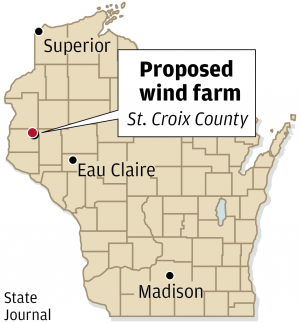 The town of Forest in St. Croix County,WI is facing a problem. It was successful in its 2-year fight to avoid a development of 41 turbines of 2.5 MWs that are almost 500 feet high. The effort involved electing a responsive town government and rescinding permits granted without proper oversight. Now local control has been overruled by the developer’s strategy to raise the size of the project, putting it under the control of the Wisconsin Public Service Commission (PSC), which has the power to grant permitting on projects over 100 MW.
The public comment period for the Wisconsin project is open until October 8. The local organization, The Forest Voice, is alarmed that the pro-wind lobbying group Clean Wisconsin is urging supporters of the wind project to add testimony to the docket–supplying a direct link from their web page. Meanwhile, according to Brenda Salseg of The Forest Voice,
If the people of Forest write a public comment on the docket, we cannot testify in person at the public hearing.
When our group requested intervenor compensation from the PSC to hire expert witnesses, we were awarded a paltry sum of $20,000.00 for attorney fees only–nothing for expert witnesses. Another intervenor, CLEAN Wisconsin, a pro-wind lobbyist organization received $43,000.00 to hire a so-called sound expert, which, of course, is supporting the wind developer. At every turn, we believe our voices of opposition are being suppressed, including from the very agency that should be protecting us.
The Highland Wind Farm is a project with 41 towers of 497 foot tall 2.5 MW turbines to be operated by Emerging Energies aka EEW Services, Hubertus, WI.
———–
Some articles about the issue include:
Wisconsin Public Service Commission rules that Highland wind project doesn’t require EIS by Jeff Holmquist, New Richmond News, August 3, 2012.
While the five-page document outlines several potential impacts that the wind farm project could have on landowners and the surrounding landscape, its conclusion is that there is “no significant impact” expected from the proposal.
Wind farm opponents seek support from St. Croix County by Jeff Holmquist, New Richmond News, July 14, 2012.
The St. Croix Health and Human Services Board will look into health concerns raised by residents of the Town of Forest related to a proposed wind farm in that community.
Wind Wise Radio
Sunday, September 23, 2012 from 7:00-8:00 edt, WWR has a conversation with William P. Short, an independent consultant whose practice specializes in renewable energy in New England. The discussion includes the alphabet soup of RECs, PTCs, RPSs–that’s renewable energy credits, production tax credits, and renewable energy portfolio standards.

Idaho’s State Representative for District 32, Erik Simpson serves on the Environment, Energy, & Technology Committee and has twice offered a bill calling for a 2-year moratorium on wind energy development. WWR discusses wind energy policy in Idaho with him, including the effect of federal subsidies and the state’s Wind Energy Task Force.

WWR gets an update from Susan Crosthwaite, the chairman of Communities Against Turbines Scotland (CATS). CATS is the national umbrella group for individuals and regional groups working to protect Scotland from wind industrialization. There has been a lot going on in Scotland since WWR spoke with Struan Stephenson (August 12, 2012).
Princeton’s turbines disappoint
Worcester Telegram and Gazette Correspondent Sandy Meindersma reports “Princeton wind turbines losing money” (9/15/12), but adds that the Municipal Light Department still made a profit in 2011. From August 2011 to July 2012, one of the turbines was inoperable, awaiting a replacement gear box.
Brian Allen, who has been general manager of the Princeton Municipal Light Department since October of last year, reported in a letter to ratepayers that an analysis of the light department’s financials reveals that the two turbines, which were installed in 2009, have lost ratepayers $1.875 million since they went online.
This is the second time a “Dear Ratepayer” message has spelled out the problems the municipal utility is facing:
The financial losses associated with the turbines are caused by a variety of factors, including a mechanical breakdown of one turbine, greater than projected expenses and lower than expected electricity production.
The turbines were expected to produce 9,000 megawatt hours of electricity each year. Actual production has been closer to 6,500 megawatt hours.
The letter in February 2012 reports the town expected a payback based on $90 per megawatt hour, but the actual market rate was half that.
Monroe and Florida Face Hoosac Project Completion
WAMC reporter Lucas Willard provides an update* on Iberdrola’s Hoosac turbine project.

This is a private, for-profit, 28.5 megawatt project of 19 turbines (1.5 MW each) on two mountain ridges in the Berkshires. Iberdrola has a power purchase agreement with NSTAR. Florida and Monroe have an agreement with Iberdrola for compensation, but although Willard reports the turbines will power 6,000 homes in Massachusetts, the electricity is going into a grid to serve the utility’s customers, wherever they are.
* opens in a new window or tab. It can take a few seconds to load the MP3 audio.Mike Fairneny is a concerned resident who lives on the Eastern slope of Crum Hill in Florida, and what he says about a “10 minute walk” to the nearest turbine of the wind farm. He’s worried about the impact of the project on the property value of his home and the possibility of what’s been called “wind turbine syndrome” – a name first penned by Dr. Nina Pierpont referring to the effects on human health caused by the low frequency vibrations from the spinning turbines, which could include headaches, nausea, vertigo, and depression.
Wildlife has no chance against turbine
The mixed alarm and sadness Fairhaven residents feel over the effects of the new turbines on local wildlife are downplayed in the South Coast Today article (8/29/12)”Dead birds, bats found near turbines worry Windwise” by Ariel Wittenberg.
Frequent trips back and forth on the bike path, which passes between the two turbines, gives birders and outdoor enthusiasts regular glimpses of the downed bats and birds.
|
|
|
|
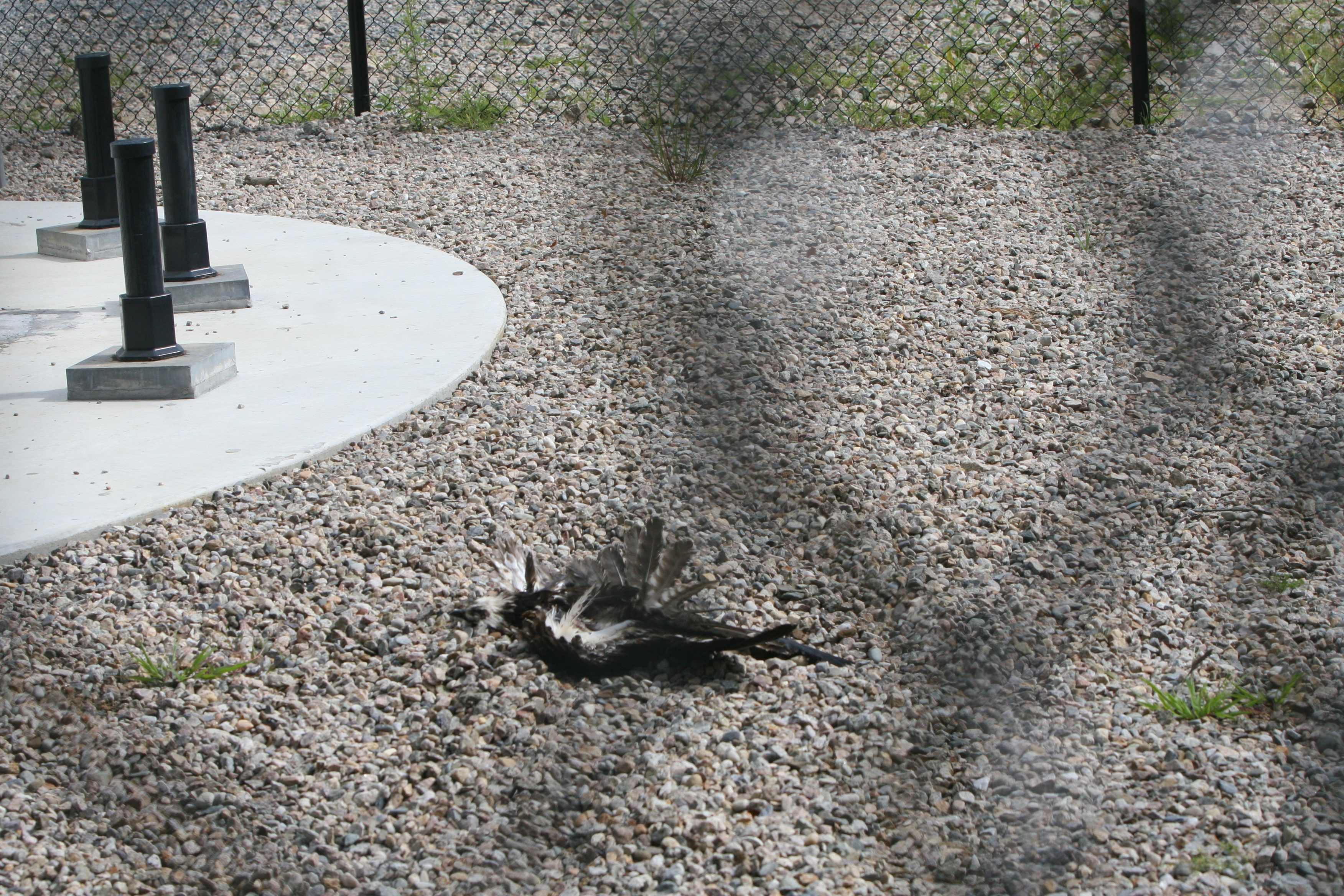
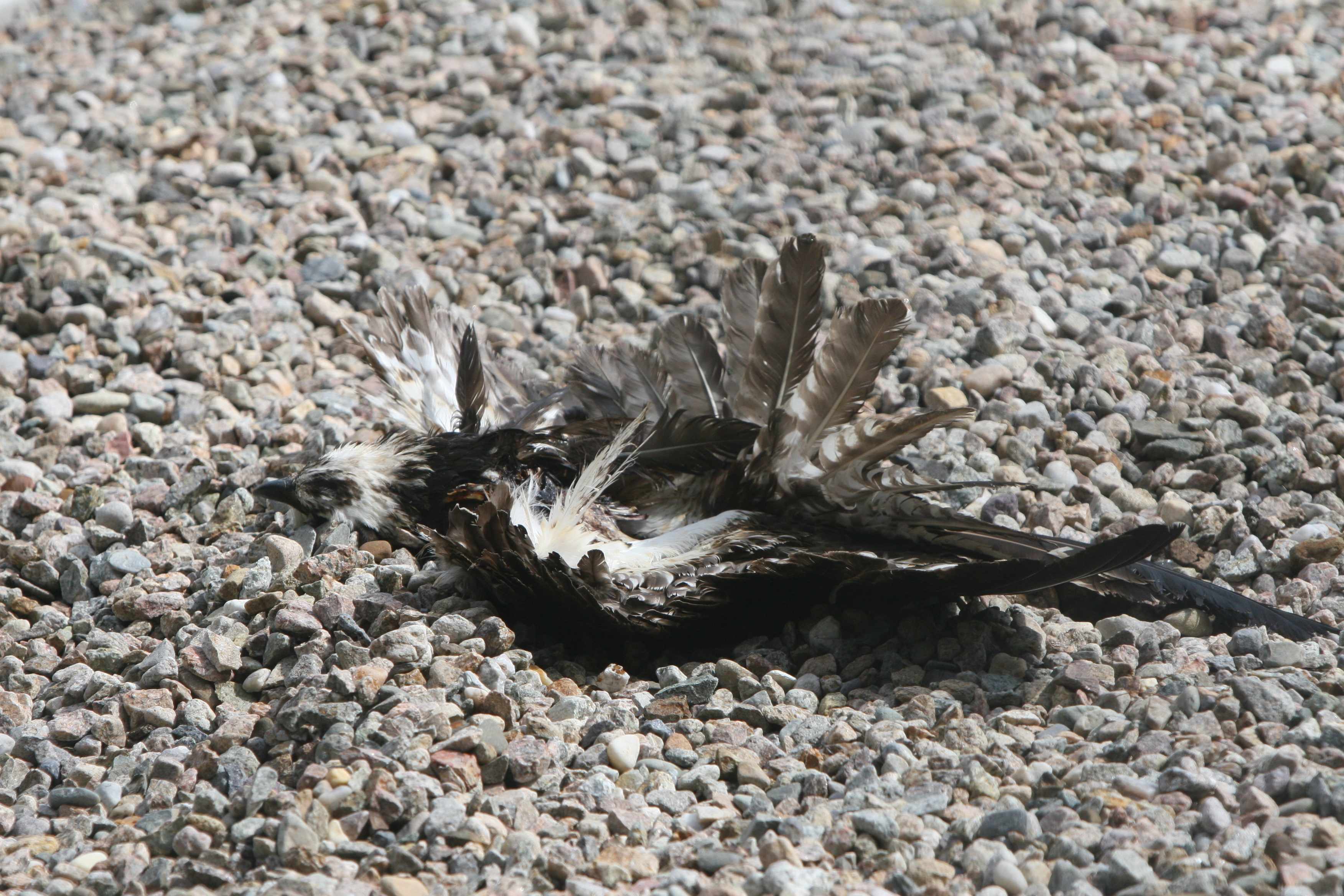
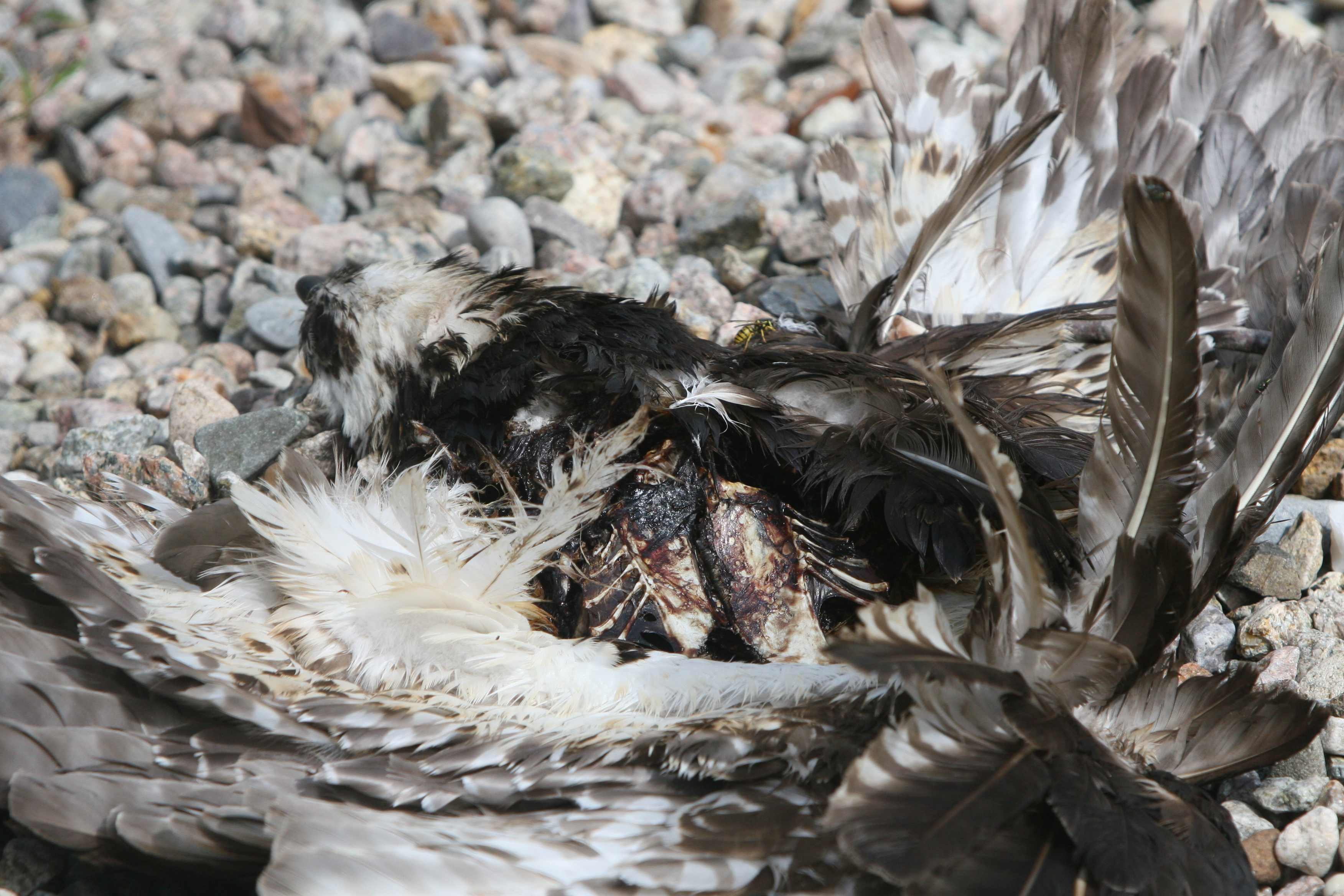
Bird above bats below:
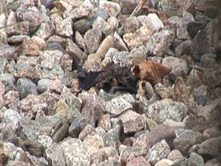 Dead bat at the base of the North turbine Dead bat at the base of the North turbine |
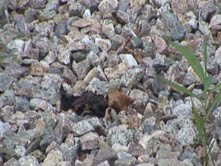 Dead bat at the base of the South turbine Dead bat at the base of the South turbine |
 Dead bat found on the bike path 9/14/12 Dead bat found on the bike path 9/14/12 |
Wind Wise Radio takes a day off
 The weekly Sunday night live blogtalkradio program Wind Wise Radio will resume on September 9, 2012 with Michael S. McCann and John Terry. Michael is a Certified Real Estate Appraiser with over 30 years of experience. He will talk about property values. John is the talented the artist who draws the wonderful Windtoons.
Michael is currently documenting a new case study from Michigan (Consumer’s Lake Wind Energy project in Lenawee County). He reports that, “One of my clients was able to sell, and my pre-project appraisal of his house, on both a pre and post turbine basis, turned out to be pretty accurate, and confirms an approximate 25% discount due to turbines.”
For any programs you might have missed, the past programs are archived.
Move Deadline to October 1st–Let New Englanders Really Comment
Flying below the radar is the proposal to coordinate among the New England states the purchasing of electricity from renewables (i.e. industrial wind). Comments on the draft Work Plan are due by Friday 8/31/12.
If you are bothered by this timeline:
- resolution adopted July 30
- draft released August 10
- comments close August 31
consider emailing NESCOE* and cc:ing the governor and the representatives appointed to this process:
- Governor Deval Patrick , Commonwealth of Massachusetts
- Dwayne S. Breger, MA Department of Energy Resources (dwayne.breger@state.ma.us)
- Heather Hunt, Executive Director NESCOE (heatherhunt@nescoe.com)
*The New England States Committee on Electricity (NESCOE) website is the low key host for the announcement (under “Coordinated Competitive Renewable Power Procurement Draft for Comment”).
Send this message to MickiBertrand@nescoe.com to extend the public comment deadline to October 1, 2012:
Dear Micki Bertrand:
I am writing in response to NESCOE’s request for comments related to a Coordinated Competitive Renewable Power Procurement Draft work plan. I was only made of aware of this issue in the last week.As a ratepayer residing in the New England region, I have significant concerns relating to the cost of any plan involving government procurement of new renewable energy and its attendant transmission. I intend to offer detailed comments on NESCOE’s draft work plan; however, the deadline of August 31, 2012 is unreasonable.
Unless it is NESCOE’s intent to discourage public comment, I strongly urge the Committee to extend the deadline for public comment to October 1, 2012.
Please let me know as soon as possible whether the Committee will be honoring my request.
Thank you very much for your attention to this important matter.
Respectfully,
Your Name
Your City/Town, MA
About NESCOE:
NESCOE is a not-for-profit organization representing the collective interests of the six New England States on regional electricity matters. It is directed by Managers appointed by the six New England Governors and advances policies to provide electricity at the lowest possible price over the long term, while maintaining reliable electric service and environmental quality.
Wind Wise Radio hosts Dr. Alec Salt
Wind Wise Radio features Dr. Alec Salt be on this weekend’s program, with news about the inter.noise conference held in New York last week.

From Vermont, Tina Fitzgerald and Scott McLane discuss the Georgia Mountain Project that has been in the news this week.
West Virginia Master Naturalists Pam and Art Dodd talk about endangered bats being killed in West Virginia and other impacts.
About Arthur and Pamela Dodds: Arthur W. Dodds, Jr., is a professional cartographer who worked for NOAA as a supervisor managing the instrument approach procedures charts for airports throughout the U.S. His credentials include training and management concerning the heights of objects which could impact flight patterns; electromagnetic field impacts on RADAR; and viewshed analysis. Mr. Dodds is also certified by the West Virginia DNR as a Master Naturalist. Mr. Dodds serves as President of the Laurel Mountain Preservation Association.
Pamela C. Dodds, Ph.D., is a Registered Professional Geologist who has worked as a geologist/hydrogeologist for the Virginia DOT, Virginia DEQ, and an environmental firm near Bristol, Tennessee. She has concentrated on groundwater contamination investigations and is currently conducting hydrological investigations in watersheds which will be impacted by industrial-scale wind turbine projects and by extensive high voltage transmission lines. Dr. Dodds is also certified by the West Virginia DNR as a Master Naturalist. Mrs. Dodds serves as Treasurer of the Laurel Mountain Preservation Association.

 Wind Wise ~ Massachusetts